5 Biggest Games + Transfer Reality Check

Published: Thu, 01/15/26

Updated: Fri, 01/16/26

Written by Nick Bateman · Follow on X (@nickbateman33)
5 Games to Watch This Weekend (Jan. 16-18)
These aren’t just the best games on the schedule. Each matchup below carries real résumé weight and has the potential to move seed lines, reshape conference races, or tighten the bubble as we head deeper into January.
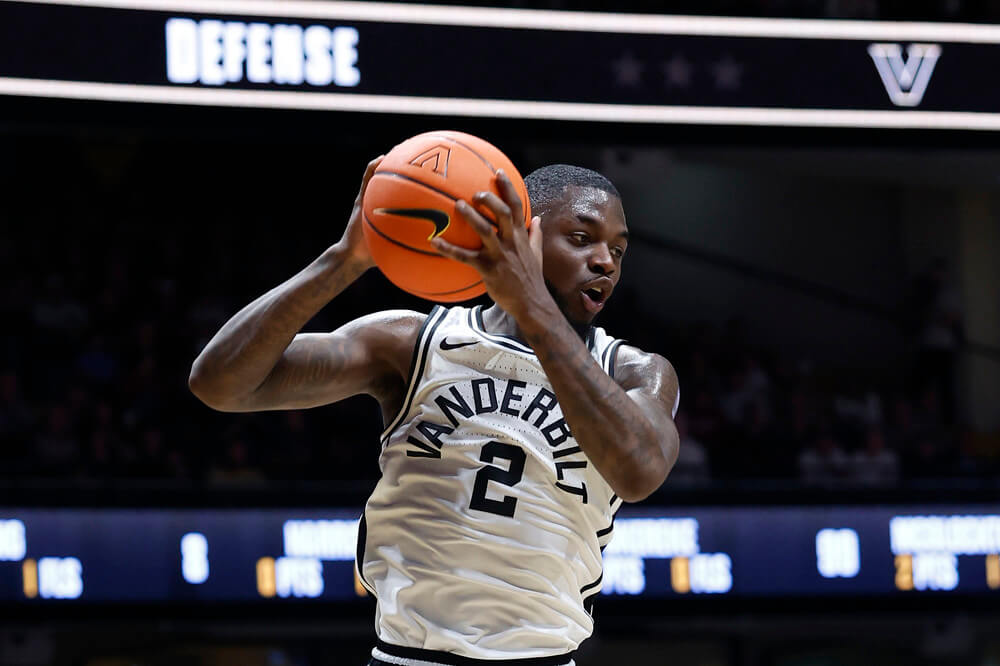
1) Florida @ Vanderbilt
Saturday 2:00 PM ET
The SEC’s top two teams by predictive strength face off.
• Game of the Weekend belongs to the Gators and Commodores.
• Florida and Vanderbilt are the two highest-ranked SEC teams on TeamRankings.
• Florida’s predictive rating ranks 11th nationally.
• Vanderbilt sits right behind them at 12th.
• This game will help determine which team should be favored for the SEC auto bid.
2) Miami @ Clemson
Saturday 2:15 PM ET
Two win streaks collide, and someone’s conference unbeaten run ends.
• The two hottest teams in the ACC meet at Littlejohn Coliseum.
• Both teams are undefeated in conference play.
• Clemson enters riding an 8-game winning streak.
• Miami has won 10 straight games.
• The winner gains momentum and early conference control.
3) Arizona @ UCF
Saturday 4:00 PM ET
Arizona’s perfect season runs into one of the strongest home-court profiles in the country.
• Arizona is one of three remaining unbeaten teams in college basketball.
• UCF is 10-1 at home this season.
• Home wins include Kansas two weeks ago and Cincinnati last week.
• A loss would leave Nebraska and Miami (OH) as the final unbeaten teams.
• That scenario was not on anyone’s preseason bingo card.
4) BYU @ Texas Tech
Saturday 8:00 PM ET
A Big 12 résumé test for two teams with very different model grades.
• TeamRankings has BYU rated 10th nationally.
• Texas Tech checks in at 24th.
• In a stacked Big 12, this is a meaningful opportunity to grab a quality win.
• Either team could use the win as conference play grinds forward.
5) New Mexico @ San Diego State
Saturday 8:00 PM ET
Bubble math meets conference control.
• This game carries major implications for both teams.
• New Mexico is firmly on the bubble.
• This is one of just three remaining Quad 1 opportunities on their schedule.
• San Diego State is 6-0 in conference play.
• The Aztecs are still working to regain favor with the selection committee.
Honorable Mention: St. John’s @ Villanova (8:00 PM ET - Saturday)
The Transfer Window Is Changing, And It Matters
The NCAA announced Wednesday that the transfer portal in both men’s and women’s college basketball will open for a 15-day period beginning the day after the National Championship Game.
That timing change may seem small, but it fundamentally alters how the sport handles its most chaotic stretch. By pushing roster movement until after the tournament ends, the NCAA is prioritizing the integrity of March Madness and reducing the off-court noise that has increasingly bled into the on-court product.
This decision was met with near-universal support from fans, players, and coaches, and it mirrors lessons learned from other sports. College football reached a breaking point when Lane Kiffin left Ole Miss for LSU before the College Football Playoff, creating a public distraction during the most important games of the season.
College basketball flirted with a similar moment last March. Kevin Willard’s cryptic comments before Maryland’s Sweet 16 matchup with Florida ignited backlash from fans while the team was still alive for a national title. The situation never reached the national scale of the Kiffin move, but it was enough of a warning sign for the NCAA to act.
What This Change Is Designed To Fix
• No more roster distractions during the tournament
• No teams losing players to the portal while still competing
• Fewer coaching changes announced mid-March
One of the biggest drivers of premature coaching moves has always been the calendar. Recruiting, roster construction, and staff hiring all happen at the same time the most meaningful games are being played.
By freezing roster movement until the National Championship is complete, the incentive to lure coaches away from active tournament teams is greatly reduced. The offseason still exists. It’s simply delayed until the moment it no longer compromises the sport’s biggest stage.
In short, the chaos hasn’t been eliminated. It’s been contained.
Why This Is A Good Thing For The Sport
March Madness works because it feels sacred. For three weeks, the focus is supposed to be on matchups, adjustments, and moments, not rumors and exit plans.
This move protects that window. It keeps the spotlight where it belongs and creates a cleaner separation between competition and offseason business. When you strip away the noise, the data tells a far more balanced story about the transfer portal than the prevailing narrative suggests.
Top 30 Impact Transfers In NCAA Basketball This Season
With the transfer window officially pushed until after the National Championship, this is a good moment to step back and evaluate how the portal is actually performing on the court this season.
Rather than focusing on volume or recruiting hype, this analysis focuses on impact. Specifically, it uses TeamRankings’ Game Score, a single-game performance metric that captures scoring efficiency, rebounding, playmaking, defensive contributions, and usage into one standardized number.
Roughly 30 percent of the top 100 players nationally by Game Score transferred during the 2025 offseason. What follows is a ranking of the top 30 transfer performances of the 2025–26 season, based entirely on on-court production.
1) Keyshawn Hall: UCF → Auburn
• Averaged 18.8 points per game last season at UCF
• Averaging 21.7 points per game at Auburn on 58.3% shooting
• Efficiency jump has come against stronger competition
• Has become a primary offensive engine for an SEC contender
2) Dior Johnson: UCF → Tarleton State
• Former 39th-ranked recruit in the 2022 class
• Averaging 23.8 points per game after 2.9 last season
• Averaged 34.3 points per game over his last three games
• Has pushed Tarleton State into WAC contention
3) Izaiyah Nelson: Arkansas State → South Florida
• Averaging 16 points and 10 rebounds per game
• Leads the American in rebounds
• Anchors South Florida’s interior profile
4) Cade Tyson: UNC → Minnesota
• Averaged 2.6 points per game at UNC
• Now averaging 21.1 points per game
• Shooting over 50% from the field
• Has pushed Minnesota into bubble relevance
5) Malik Reneau: Indiana → Miami
• Averaging 20.4 points and 6.8 rebounds per game
• Shooting 57% from the field
• Has stabilized Miami’s offensive identity
6) MJ Collins: Vanderbilt → Utah State
• Never averaged more than 7.4 points per game before transferring
• Now averaging 20.5 points per game
• Leads the Mountain West in FG% and 3PT%
• Driving Utah State’s top-15 NET profile
7) Daniel Freitag: Wisconsin → Buffalo
• Played just over two minutes per game as a freshman
• Now averaging 20.3 points per game
• Leads the MAC in scoring
8) Hamad Mousa: Dayton → Cal Poly
• Averaged 1.3 points per game at Dayton
• Now averaging nearly 22 points per game
• Adds 6.5 rebounds as a 6’8 guard
9) Chandler Cuthrell: Purdue Fort Wayne → Elon
• Jumped from the Horizon League to the CAA
• Averaging 21.3 points per game on 52.5% shooting
• Role expansion unlocked scoring ceiling
10) Yaxel Lendeborg: UAB → Michigan
• Nearly entered the NBA Draft last spring
• Stats dipped slightly in a deeper lineup
• Remains one of the most efficient two-way forwards in the country
11. Henri Veesaar (Arizona → UNC)
12. Duke Miles (Oklahoma → Vanderbilt)
13. Tre Donaldson (Michigan → Miami)
14. PJ Haggerty (Memphis → Kansas State)
15. Rodney Rice (Maryland → USC)
16. Dedan Thomas Jr (UNLV → LSU)
17. Terrence Brown (Fairleigh Dickinson → Utah)
18. Michael Ajayi (Gonzaga → Butler)
19. Dennis Parker Jr (NC State → Radford)
20. Dylan Faulkner (Lipscomb → Samford)
21. Lamar Wilkerson (Sam Houston State → Indiana)
22. Frank Mitchell (Minnesota → St. Bonaventure)
23. Pharrel Payne (Texas A&M → Maryland)
24. Brody Robertson (UT Arlington → Oakland)
25. Cam’Ron Fletcher (Xavier → High Point)
26. Chad Baker-Mazara (Auburn → USC)
27. Bennett Stirtz (Drake → Iowa)
28. Amani Hansberry (West Virginia → Virginia Tech)
29. Rob Wright III (Baylor → BYU)
30. Nick Boyd (San Diego State → Wisconsin)
The Main Takeaway
The transfer portal draws constant criticism, but the data tells a much more balanced story. When evaluated through production rather than perception, the portal is clearly enabling a meaningful number of players to unlock their potential in better-fitting situations.

The Best Way to Follow College Hoops

CBB By the Numbers

College basketball is noisy. Even if you watch every game, perception and media narratives rarely line up with what the numbers are showing.

This newsletter breaks down the season through the data, highlighting where teams may be stronger or weaker than they appear so you have a clearer view before March.

Join Here


111 S Highland Avenue #458
Memphis TN 38111
US


Unsubscribe   |   Change Subscriber Options