|
|
|
Bracket Check: Who's Up? Who's Down? (Jan. 19)
|
|
This week’s bracket movement was anything but subtle.
|
|
Across the country, teams either made real, resume-altering statements or watched solid footing turn shaky in a matter of days. Road wins flipped seed lines, collapses crushed tournament odds, and a handful of teams now sit at inflection points where the next two weeks could define their March fate.
|
|
Below, we sort the chaos into three buckets: the teams climbing fast, the ones slipping at the worst possible time, and the situations worth watching closely as the margins between seeds, bubbles, and bid thieves continue to shrink.
|
|
|
|
|
|
5 Risers: Teams Making Real Moves
|
|
1. Kentucky keeps rewriting its season.
|
|
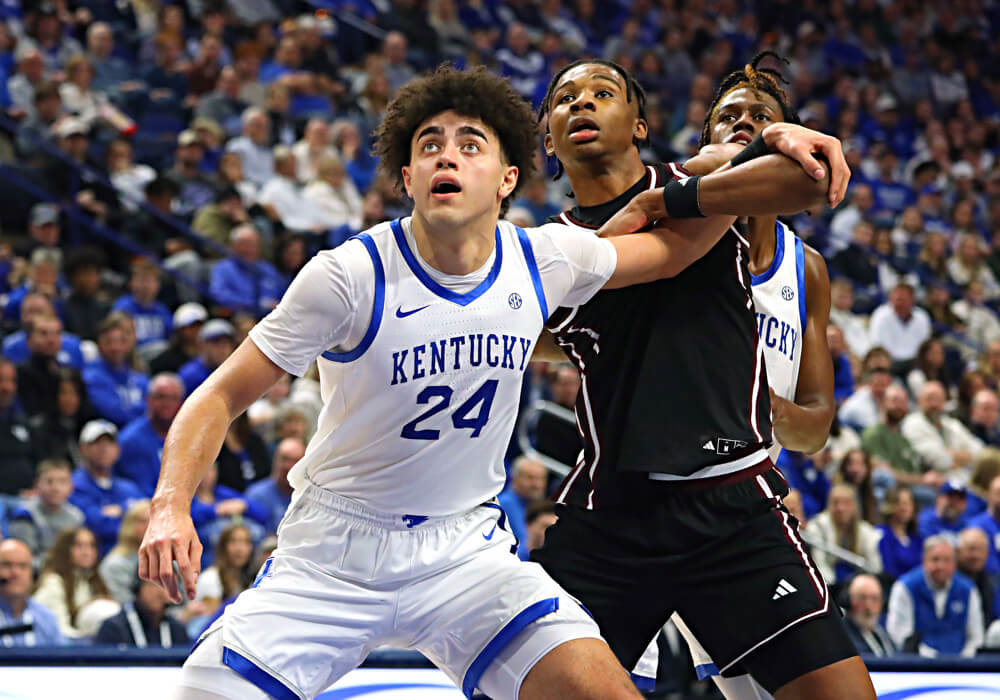
A week ago, Kentucky was flirting with disaster. On Wednesday in Baton Rouge, the Wildcats erased a 38–22 halftime deficit and won on a Malachi Moreno buzzer beater, a result that felt more like survival than progress.
|
|
Then they did it again. On Saturday in Knoxville, Kentucky trailed 38–22 with five minutes left in the first half and still found a way to escape 80–78. Two Quad 1 road wins in four days completely flipped their profile, turning a potential free fall into one of the strongest weeks any bubble team has posted this season.
|
|
2. Kansas reminds everyone of its ceiling.
|
|
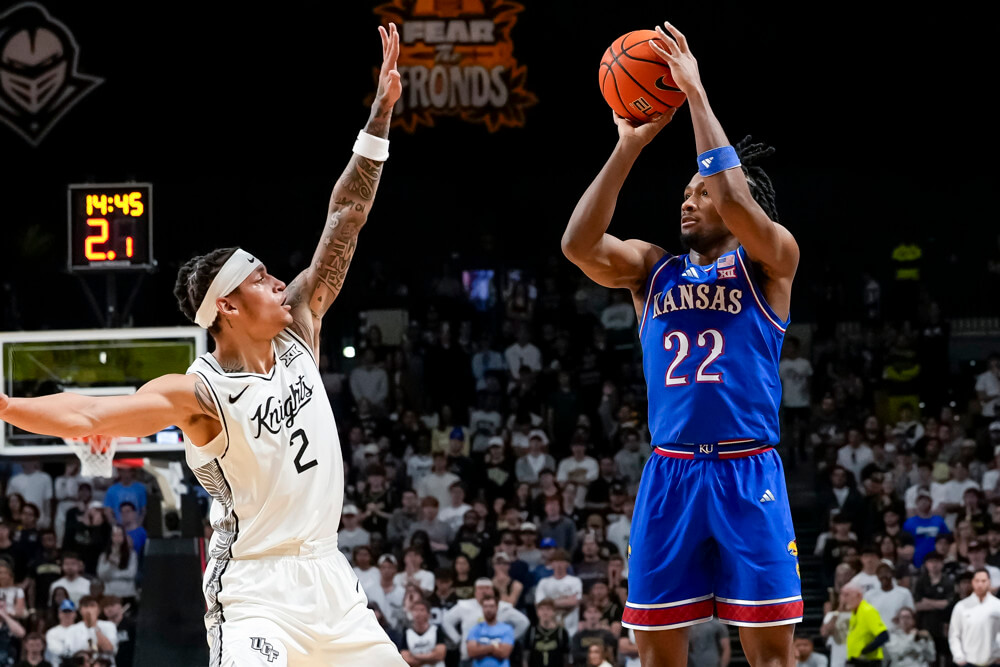
Big 12 play started unevenly for Kansas, with losses to UCF and West Virginia and an overtime escape against TCU raising legitimate concerns. That noise vanished quickly. A 21-point dismantling of Iowa State followed by an 18-point blowout of Baylor has reset the conversation, with national media once again asking whether this Jayhawks team can make a deep April
run.
|
|
3. Virginia and Clemson keep climbing, again.
|
|
These two have become weekly fixtures in the riser column. Virginia opened January at 31st in the NET and has climbed to 14th. Clemson began the month at 37th and now sits 25th after winning nine straight games.
|
|
The Clemson run is particularly eye-catching. The Tigers have won 24 of their last 26 regular season ACC games, a stretch of sustained dominance that no longer feels fluky, even if it still feels a bit surreal.
|
|
4. San Diego State resurrects its at-large case.
|
|
A month ago, San Diego State looked buried after home loss to Troy and a 40-point defeat at Michigan. Since then, the Aztecs have won seven straight and remain unbeaten in Mountain West play. TeamRankings now gives SDSU an 80 percent chance to make the tournament, a remarkable turnaround from what looked like a lost nonconference résumé.
|
|
5. St. John’s looks like itself again.
|
|
Rick Pitino’s team has flipped the script fast. St. John’s has won four straight, including three Quad 1 road victories, all by an average margin of 15.5 points. This version looks far closer to last year’s No. 2 seed profile than the shaky bubble team we saw early in the season.
|
|
|
|
|
|
|
|
5 Fallers: Teams Losing Ground
|
|
1. Gardner Webb hits free fall territory.
|
|
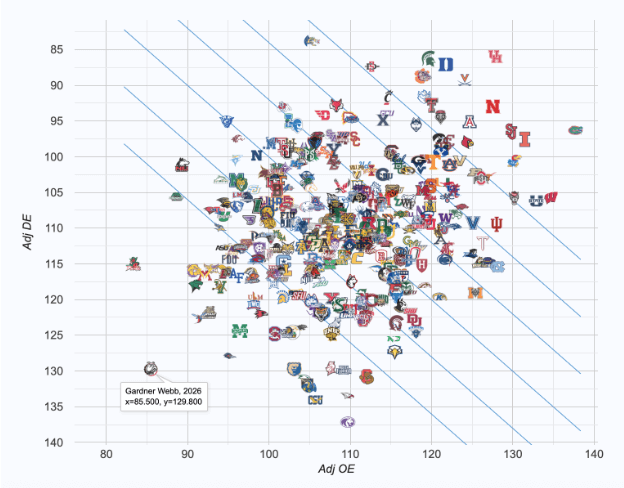
Look at the graph above. Now direct your attention to the bottom left corner, and you'll find Gardner-Webb with the lowest adjusted offensive and defensive efficiency. Over the past two weeks, Gardner Webb is 2-18, coming off a 55-point road loss to High Point, a nine-point home loss to Radford, and a 37-point home defeat against Presbyterian. Any lingering tournament
conversation has been fully extinguished.
|
|
2. North Carolina stumbles out West.
|
|
Winning both California road games in the ACC is difficult. Only Wake Forest in 2025 and Duke in 2026 have managed it. Still, context matters. North Carolina was a four-point favorite at Stanford and a 7.5-point favorite at Cal. Losing both games significantly dents a résumé that was trending toward a protected seed and now looks far less stable.
|
|
3. Iowa State’s familiar January slide.
|
|
Iowa State entered the week undefeated through 16 games and firmly planted on the one seed line. That grip loosened quickly after an 84–63 blowout loss at Kansas and a 79–70 home loss to a 9–8 Cincinnati team.
|
|
The top seed dream is not dead, but the résumé now aligns closer to a three seed. This pattern is also familiar. Iowa State has gone through similar January dips in each of the past five seasons, often starting fast before leveling off once conference play deepens.
|
|
This year is no different. After a 13–0 start, the Cyclones are now 3–2 in January, reinforcing that early dominance does not always carry cleanly into February.
|
|
4. TCU’s collapse changes everything.
|
|
A few weeks ago, TCU sat near a 50 percent chance to make the tournament. That number has cratered to four percent on TeamRankings.
|
|
The turning point was catastrophic. TCU led Kansas 82–67 with 4:20 left in Allen Fieldhouse, a potential Quad 1A win that would have removed all bubble anxiety. Instead, the Horned Frogs lost 104–100 in overtime, then followed it with losses to Arizona at home, BYU on the road, and Utah on the road. That sequence erased their margin for error entirely.
|
|
5. SMU running out of résumé runway.
|
|
Since a strong January 3 win over North Carolina, SMU has dropped games to Clemson, Duke, and Virginia, with its only victory coming on a Boopie Miller half-court buzzer beater against Virginia Tech. The most challenging portion of the Mustangs’ schedule is now behind them, which also means the résumé boosting opportunities are pretty much gone. From here on out,
there is little room for mistakes.
|
|
|
|
|
|
|
|
You Need to Keep an Eye on These Teams
|
|
1. Who stays undefeated the longest?
|
|
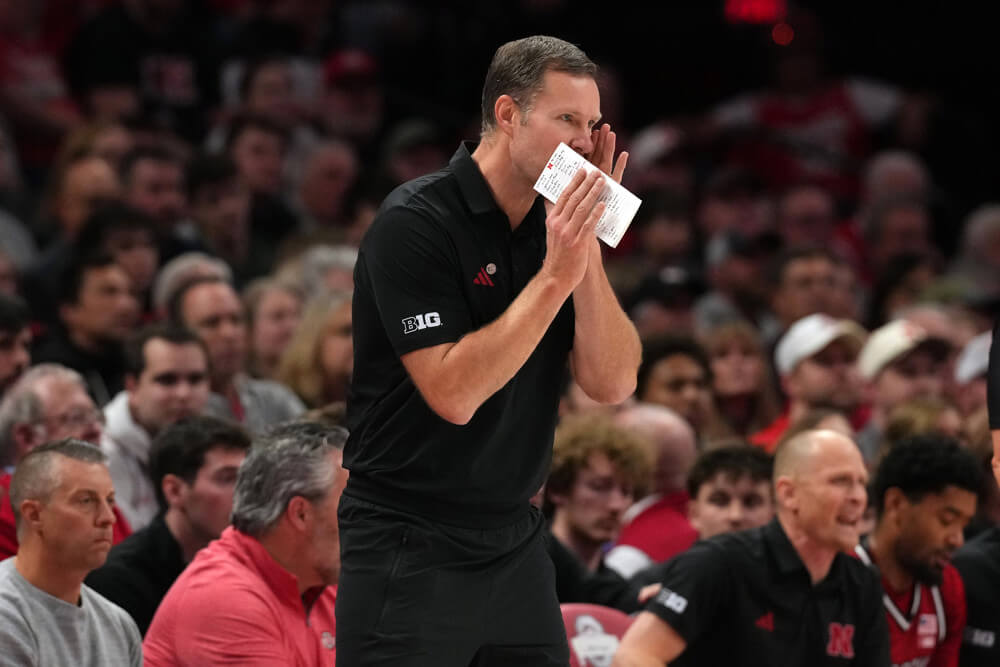
Nebraska (18-0) is the most obvious candidate. Their toughest remaining game comes next Tuesday at Michigan (Jan. 27), where many projection sites (including TeamRankings) believes they will hit their first loss.
|
|
However, the Cornhuskers have a legitimate case to get the win. Over the past two weeks, Nebraska has actually been playing better basketball than Michigan according to efficiency trends, making this a potential inflection point rather than a foregone loss.
|
|
2. Arizona’s narrowest path to perfection.
|
|
On paper, Arizona is favored in every remaining game except a February 21 trip to Houston. That makes the Wildcats’ path look clean.
|
|
The real test comes sooner. Next Monday on ESPN’s Big Monday, Arizona has just a 50.6 percent chance to win at BYU. If they survive Provo, the rest of the schedule opens up considerably.
|
|
3. Miami Ohio and the MAC chaos factor.
|
|
This is where the data gets strange. TeamRankings projects Miami Ohio’s toughest remaining game as Kent State, with only a 41.3 percent chance of a loss.
|
|
That projection implies Miami Ohio could finish the regular season undefeated. The caveat is obvious. This is the MAC, where chaos is the default setting. Add in the 355th-ranked strength of schedule nationally, and it’s fair to question whether the models fully know what to do with this profile.
|
|
4. Florida’s surge looks real.
|
|
Over the past two weeks, Florida has been one of the two best teams in the country by recent performance metrics. The other is Houston. A potential rematch of the 2025 national championship in 2026 suddenly feels less hypothetical than it did a month ago.
|
|
5. Fragile profiles: Alabama, Santa Clara, and Saint Louis.
|
|
Alabama remains explosive but structurally vulnerable. The Crimson Tide allow 12.4 offensive rebounds per game, fourth worst nationally, and rank 318th in forcing turnovers. Without extra possessions, their pace-heavy approach requires an unsustainably high shot-making edge.
|
|
Santa Clara is moving the opposite direction. The Broncos posted the second-largest jump in tournament odds this week on TeamRankings, climbing to 57 percent, a 17.7 point increase that puts them firmly in the conversation.
|
|
Saint Louis continues to quietly benefit from stability while others stumble. TeamRankings now projects the Billikens’ most likely seed as a five seed on Selection Sunday. That would mark the highest-seeded Atlantic 10 team since the 2014 runs by VCU and Saint Louis.
|
|
|
|
|
The Best Way to Follow College Hoops
|
|
|
College basketball is noisy. Even if you watch every game, perception and media narratives rarely line up with what the numbers are showing.
This newsletter breaks down the season through the data, highlighting where teams may be stronger or weaker than they appear so you have a clearer view before March. |
|
|
|
|
|
|
|
|
|